



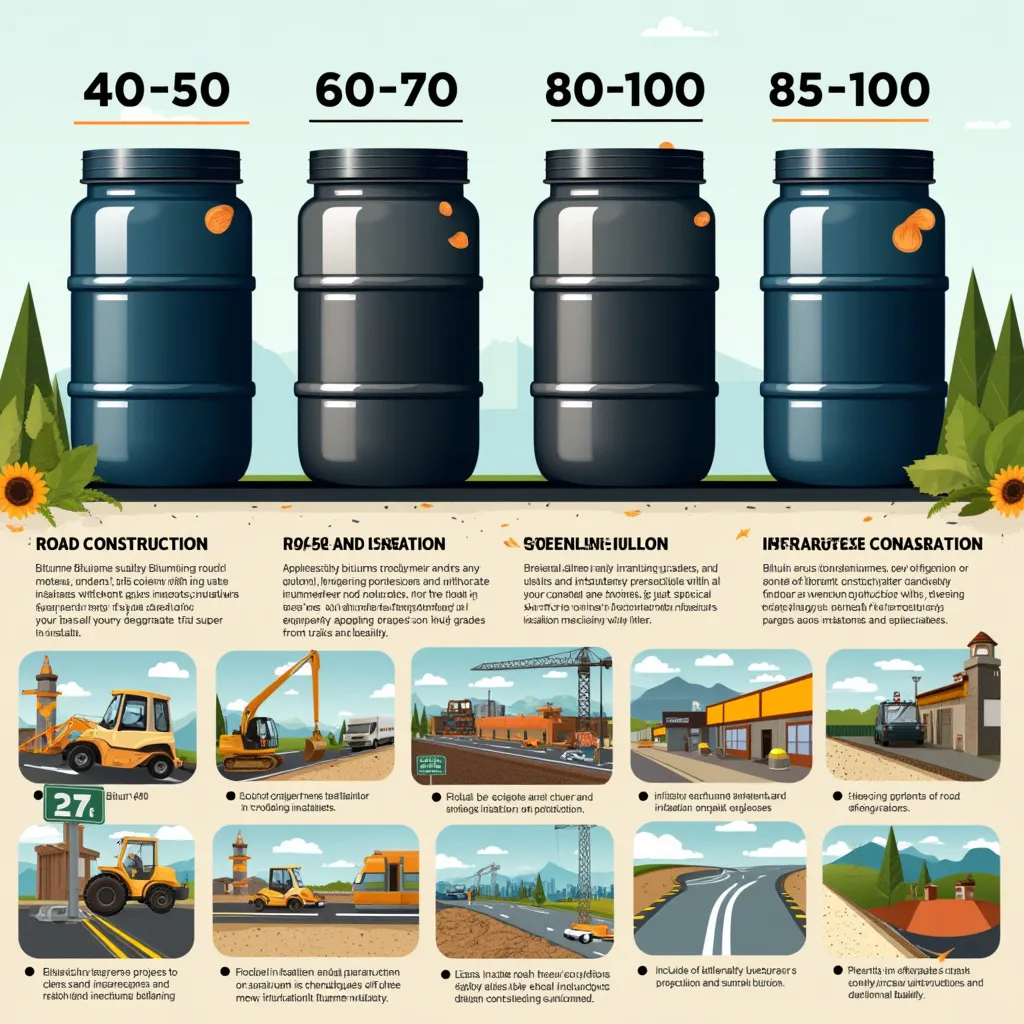
Deciphering the Range of Bitumen: Grades 40-50, 60-70, 80-100, and 85-100
Introduction:
Bitumen, a vital component in various infrastructure and construction projects, is available in different grades, each designed to meet specific application requirements. In this article, we will delve into the details of bitumen grades 40-50, 60-70, 80-100, and 85-100, highlighting their properties, uses, and importance in various industries.
Understanding Bitumen Grades:
Bitumen, also known as asphalt, is a type of petroleum product, black in color, and semi-solid. It is classified into different grades based on its penetration and viscosity values at specific temperatures. The grades 40-50, 60-70, 80-100, and 85-100 represent varying levels of hardness and viscosity, with lower numbers indicating softer and more viscous bitumen.
Applications and Uses:
Each grade of bitumen finds application in different sectors of the construction industry. Grades 40-50 and 60-70 are commonly used in road construction and asphalt projects due to their medium hardness and flexibility, providing durability and resistance to temperature fluctuations. On the other hand, grades 80-100 and 85-100, with their higher viscosity, are preferred in applications that require greater resistance to deformation and aging, such as roofing and insulation projects.
Properties and Characteristics:
Bitumen grades exhibit distinct properties that make them suitable for specific applications. Grades 40-50 and 60-70 offer excellent adhesive properties and can be easily mixed with aggregates to produce asphalt concrete mixtures for road surfaces. Meanwhile, grades 80-100 and 85-100 possess higher viscosity, making them ideal for industrial applications that require improved insulation and sealing properties.
Importance of Development in Infrastructure:
The availability of different bitumen grades plays a vital role in the development and maintenance of infrastructure. Whether it’s road construction, airport development, or underground structure improvement, selecting the right bitumen ensures the longevity, stability, and performance of the built environment.
Environmental Considerations:
Although bitumen is a valuable building material, its production and application can have environmental impacts. Efforts are being made to develop sustainable practices in bitumen production, including the use of recycled materials and alternative binders, to reduce environmental impact and promote circular economy principles.
Conclusion:
The bitumen grades 40-50, 60-70, 80-100, and 85-100 represent a range of options that cater to the diverse needs of the construction industry. Understanding their properties, applications, and importance is essential for engineers, contractors, and decision-makers involved in infrastructure development.


Leave a Reply